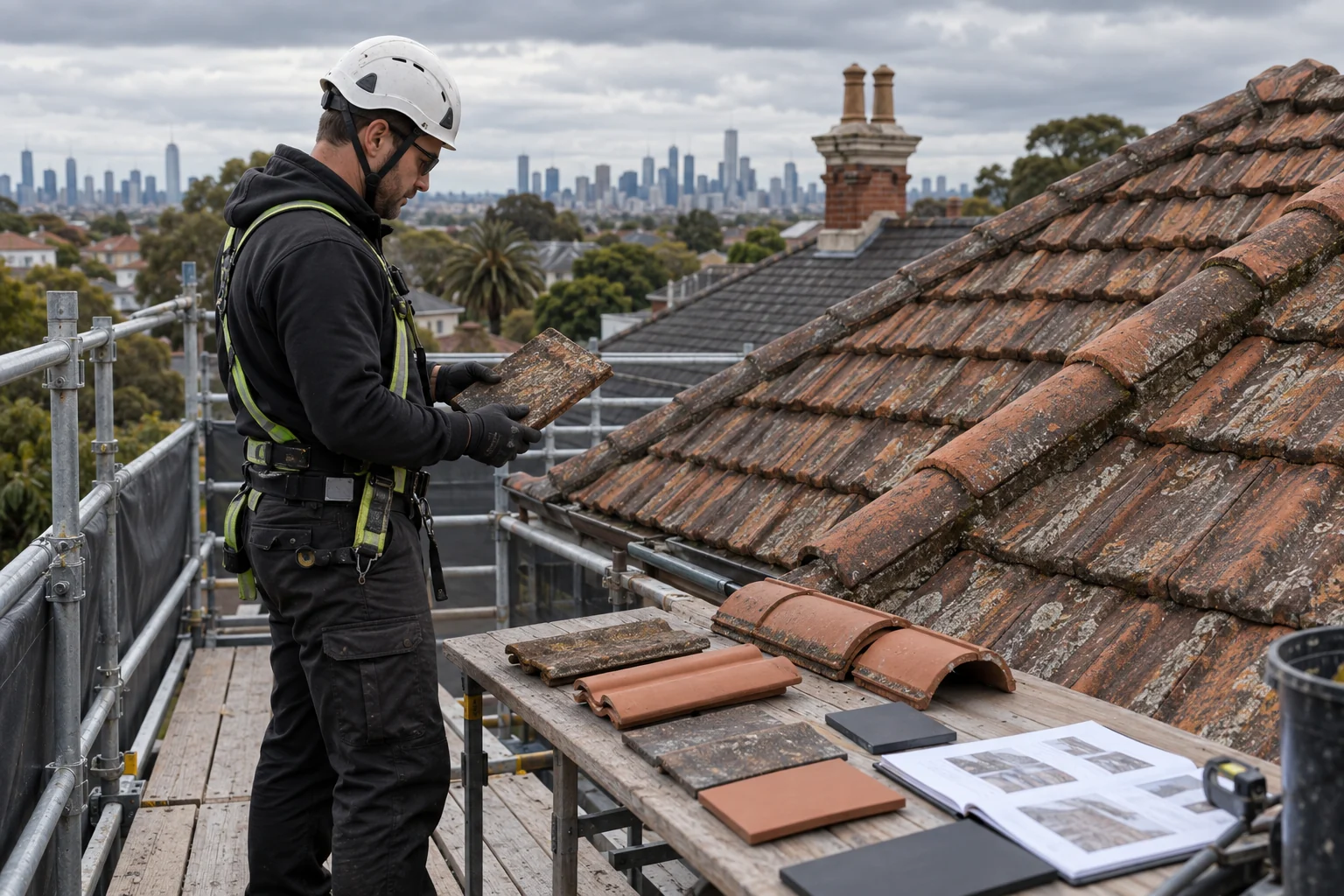
Roof Restoration Melbourne Scoped beyond Cleaning and Coating
Request Roof Restoration Melbourne with the leak evidence, roof material, access, safety controls, repair boundary and close-out record visible before competing quotes are compared.
STORMFOLD / SER7E1330evidence / zone / access / close
ORIGINAL DEVELOPMENT VISUAL / NOT A CUSTOMER JOB
MELBOURNE ROOF REPAIR DECISION
Roof Restoration Melbourne Quote Boundary
The commercial focus is comparing a restoration scope across repairs, preparation, ridge work, drainage details and coating suitability. A provider still needs safe access and site evidence before confirming cause, quantities or price.
01Observe02Locate03Scope04Close
01 / ROOF EVIDENCE
Roof Restoration Melbourne Inspection Inputs
These observations help a Melbourne roofing provider plan attendance without turning homeowner evidence into a diagnosis.
Roof material and age
Repair demand before coating
Surface, drainage and access condition
02 / REPAIR QUOTE
Roof Restoration Melbourne Work Scope
Ask each quote to state the same roof zones, quantities, access and exclusions.
Repairs and preparation
Bedding, pointing or fastener boundary
Coating system and exclusions
03 / ROOF HANDOVER
Roof Restoration Melbourne Completion Record
Completion evidence should reconnect finished work to the approved roof scope.
Product and colour record
Work areas
Care and remaining defects
ROOF RESTORATION MELBOURNE PROCESS
From Roof Restoration Melbourne Enquiry to Melbourne Roof Repair Close-Out
01
Record Roof Leak Evidence
Describe rooms, timing, rain pattern and earlier roof work from safe positions.
02
Confirm Roof Access Melbourne
Identify height, pitch, fragile zones, skylights, occupants and approval controls.
03
Approve Roofing Repair Scope
Compare roof zones, materials, quantities, exclusions and written variation rules.
04
Receive Roof Repair Records
Collect completed locations, photographs, materials, limitations and next actions.
ROOF SAFETY MELBOURNE
Do Not Climb onto a Wet, Damaged or Uncertain Roof for a Quote
Use internal and ground-level evidence. Keep clear of bulging ceilings, fallen lines, fire, structural movement and immediate hazards; call Triple Zero where life safety is involved.